September 2026 – Tesla continues to roll out FSD v14 releases to Hardware 4 vehicles. Those with Hardware 3 are currently on v12, however “FSD v14 Lite” is currently in testing and will be made widely available to Hardware 3 users in 2026, per Tesla from the Q3 earnings call.
FSD Beta – Wider Releases
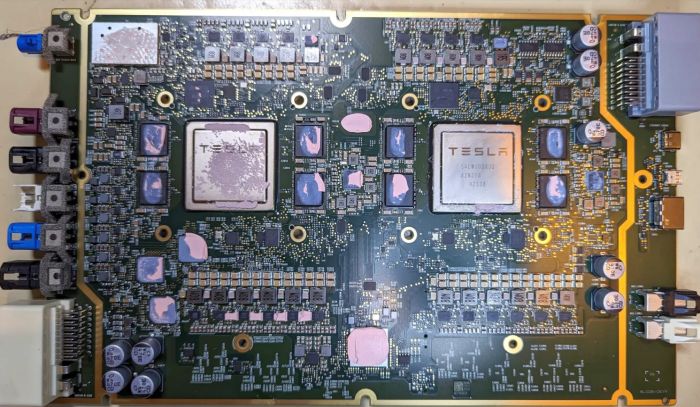
FSD 14 – Tesla’s Full Self-Driving (FSD) is entering one of its most significant transition phases since the jump to v12. FSD V14.3.X is currently HW4/AI4-only (the full, uncompromised version). Hardware 3 (HW3) vehicles — found in Teslas built roughly through early 2023 will not receive V14.3 in its current form. Tesla has been very clear (in earnings calls and public statements): They will provide a FSD v14 Lite version (or optimized/pruned v14 branch) specifically for HW3, which has now been rolled out – see below for more.
FSD v14.3.9 to include Automatic Collision Evasion (ACE)
Tesla has officially announced the rollout of FSD (Supervised) v14.3.9 (associated with software update 2027.5), introducing a major active safety feature called Automatic Collision Evasion.
FSD Supervised v14.3.9 starting to roll out shortly
— Tesla AI (@Tesla_AI) September 4, 2026
This release includes a new active safety feature set: FSD Supervised can now activate on your behalf when an imminent collision is detected and Automatic Emergency Braking (AEB) may not be enough.
It may also engage if we…
Key Highlights of FSD v14.3.9
- Active Safety Beyond Braking: Unlike traditional Automatic Emergency Braking (AEB)—which strictly applies brakes in a straight line—Automatic Collision Evasion leverages the full FSD neural network during manual driving. If the vehicle determines that AEB alone will not prevent an impact, FSD automatically takes over steering, braking, and acceleration to execute evasive maneuvers (such as swerving into an adjacent lane or onto a shoulder).
- Secondary Trigger Scenarios: In addition to imminent frontal collisions, the feature can automatically engage if the system detects severe driver inattention (e.g., reaching into the back seat, looking away for an extended period) or determines that the driver accidentally disengaged FSD right before a critical situation.
- Operating Conditions & Limits:
- Speed Range: Interventions occur primarily between ~22.5 mph and 85 mph on structured or divided roads.
- Driver Override: Pressing the accelerator is ignored during an intervention, and light brake pressure only increases deceleration without canceling the maneuver. To immediately abort the intervention and regain control, the driver must apply strong counterforce to the steering wheel.
- Post-Intervention Handoff: Once the threat has passed, the vehicle emits audible chime alerts and prompts the driver to resume active control.
- Requirements: The capability requires the vehicle to have an active FSD (Supervised) entitlement (either purchased or subscribed) with FSD enabled in the vehicle settings menu.
- Potential Extras: Reports suggest this release cycle may also laying the groundwork for upcoming features such as automated pothole avoidance.
FSD v14.3.8 is the Current Release
FSD v14.3.8 (2026.26.6.5) is the latest release.
FSD v14.3.8 Initial Take from Testers
FSD 14.3.7 is arguably the most relaxing and assertive version for highway and standard city cruising, having largely cured the “jittery” braking that plagued earlier 14.3 builds. However, the “parking” and “navigation” components still require vigilant supervision, as the car frequently fails to stick the landing at the end of a trip
It continues the rapid pace of “point release” updates aimed at refining the 14.3 branch. While official release notes remain unchanged from previous versions, this update introduces under-the-hood enhancements including an upgraded reinforcement learning stage, a rewritten AI compiler for 20% faster reaction times, and improved 3D geometry and sign recognition. Initial feedback suggests a polarizing experience: for many, the system feels more human-like and confident, while for others, it continues to struggle with “last mile” precision and erratic braking behaviors.
The Pros: Major Improvements
- Drastically Smoother Braking: Many users report a significant reduction in “brake pulsing” or “brake stabbing” during standard city driving and roundabouts. The system feels more composed and less likely to tap the brakes unnecessarily for pedestrians walking parallel to the road.
- Resilient All-Weather Performance: The update handles heavy rain and low-visibility conditions with remarkable clarity. The upgraded vision encoder allows the vehicle to “see” through rain more clearly than the human eye, maintaining a “rock solid” feel even in downpours.
- Enhanced Decision Making: The 20% faster reaction time contributes to decisive unprotected left turns and assertive lane changes. The car is notably patient in busy parking lots and demonstrates “superhuman” awareness of potential hazards, such as predicting when another vehicle is about to pull out in front.
- Arrival and Parking Flexibility: New UI features, such as the “Pullover” button for drop-offs and the ability to start self-driving directly from a parked position, offer a more seamless end-to-end experience.
- Confidence in Complex Maneuvers: The car successfully executes difficult U-turns on tiny roads and handles narrow street navigation with improved spatial awareness
The Cons: Persistent Limitations
- Inconsistent Parking Logic: Despite being faster, the parking model remains erratic. Drivers observed the car parking in the middle of roads, choosing handicap crosshatches, or parking off-center in supercharger stalls.
- Hesitation at Intersections: Some users report a regression in intersection confidence, where the vehicle “stutters” or taps the brakes at empty crosswalks and green lights. Small environmental factors, like a flag blowing in the wind, can still cause the car to “freeze” or brake hard.
- Navigation and Lane Selection Gaps: The “navigator” continues to make questionable choices, such as driving behind buildings, missing highway exits due to late lane changes, or selecting circuitous routes that ignore simpler paths.
- Pothole Avoidance Missing: Despite being a highly anticipated feature listed as “coming soon” in the notes, the system still fails to actively recognize or avoid potholes, necessitating human intervention to prevent damage.
- Lack of Speed Override: There is persistent frustration over the lack of a manual max speed control separate from the pre-defined profiles (Mad Max, Hurry, Chill). The system can still misread signs, driving too slowly in standard mode or exceeding comfort levels in “Hurry” mode.
- Hardware and Maintenance Concerns: Emerging reports indicate that Hardware 3 computers may face failures (such as dead cameras or auto-wiper issues) around 70,000 to 90,000 miles, which can be a costly out-of-warranty expense for owners
FSD v14.1 Lite Rolls Out
Tesla has officially begun rolling out its long-awaited Full Self-Driving (FSD) v14 “Lite” to older Hardware 3 (HW3/AI3) Model Y and Model 3 vehicles (no Model S and X yet), delivering on a commitment to bring the architectural advancements of newer hardware to legacy fleets. By “distilling” the intelligence and neural network architecture of HW4 v14 into a compressed footprint optimized for HW3’s lower processing bandwidth, the update unlocks major capabilities including reinforcement learning, offline models, and much smoother driving comfort with reduced false slowdowns. Furthermore, the release achieves near-feature parity with newer models by introducing parking, unparking, and reversing capabilities, customizable “Arrival Options” (like driveway or curbside drop-offs), and persistent Speed Profiles—though Tesla emphasizes that it remains a hands-on, Level 2 supervised system.
FSD v14.1 Lite for HW3 Vehicles
Tesla FSD v14.3.8: Outstanding Smoothness with Familiar “Last-Mile” Quirks
The latest FSD v14.3.8 update delivers a highly polished driving experience that focuses on refined comfort and improved decision-making. Testers report a highly natural, confident flow on the road, supported by a newly upgraded vision encoder and reinforcement learning models. This release also introduces highly requested user-interface flexibility for FSD visualizations. However, while the system excels at open-road navigation, it still struggles with precise low-speed maneuvers, parking logic, and legacy hardware limitations
FSD V14.1 Lite First Impressions
The Pros: Major Improvements
- Exceptional Driving Smoothness: The harsh “brake stabbing” and jitteriness of earlier builds are virtually gone, replaced by highly comfortable deceleration and normal-feeling acceleration curves.
- Decisive Intersection Handling: Unprotected left turns and U-turns are handled with impressive human-like confidence, completely eliminating the hesitant “creep-and-double-check” stutter.
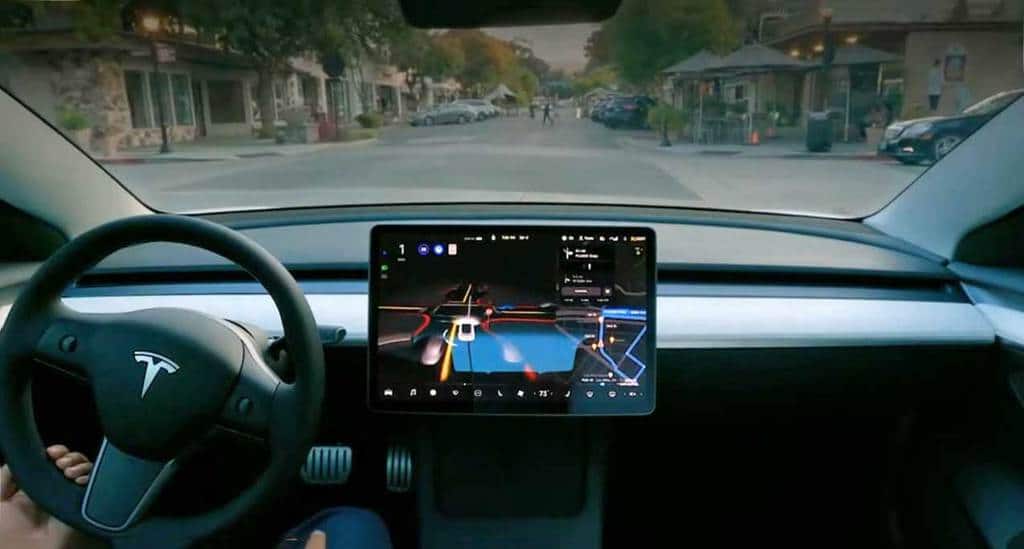
- Customizable Visualization Zoom: Drivers can now manually toggle the driving visualization zoom level on the center screen between 0.5x, 1x, and 2x, allowing a wider or tighter view of FSD’s path planning and surrounding geometry.
- Improved Vulnerable Road User Reactivity: The vehicle demonstrates highly cautious safety behavior, slowing naturally for pedestrians and yielding appropriately to jaywalkers.
- Actually Smart Summon (ASS) Boost: Under-the-hood model upgrades now allow Actually Smart Summon to operate at slightly faster speeds of up to 13 km/h (approx. 8 mph).
The Cons: Persistent Limitations
- Awkward Parking & Logic Errors: The parking stack remains highly inconsistent. The vehicle has been observed parking in handicap spaces, parking uncomfortably close to obstacles, or performing bizarre maneuvers like reversing backward straight through empty parking stalls.
- Incorrect Stop Sign Positioning: At several intersections, FSD still stops far too back from the actual white painted line, bringing the car to a halt near the physical stop sign pole instead.
- Over-reliance on Map Data over Vision: The vehicle still experiences issues with speed limit sign recognition, sometimes defaulting to 30 mph in a 70 mph zone if there are no lead vehicles. Furthermore, obstacle avoidance (such as the “thin chain” test) appears to rely on hardcoded map geofencing rather than live, active visual perception.
- Hardware 3 (HW3) Performance Deficits: There is a growing divide between legacy HW3 and newer HW4 vehicles. Legacy owners continue to report steering wheel “wobble”, higher processing latency in complex environments, and potential hardware component failures under the heavy compute loads of the v14 stack.
- Rough Speed Bump Transitions: Although the system detects physical speed bumps, it often registers them too late or crosses them too quickly, resulting in uncomfortable, jarring rides.
What’s Coming Up Next for FSD?
Tesla’s autonomy roadmap is currently in a transition phase, deploying FSD v14.3 while preparing for major upcoming milestones, including optimized support for older hardware and the eventual leap to version 15. This progression focuses on stabilizing the current architecture, introducing end-to-end autonomous parking, and significantly increasing model complexity to achieve true unsupervised autonomy,.
Key Roadmap Milestones
- “Banish” Autonomous Parking: Slated for the Summer 2026 update, this end-to-end solution allows a driver to exit at a store entrance while the car independently navigates a parking lot to find a spot and park itself.
- FSD v15 Architectural Shift: Planned for late 2026 or early 2027, v15 will introduce a 10-billion parameter model. This 10x increase in parameters is intended to enable “active reasoning,” allowing the vehicle to better anticipate hidden hazards and handle chaotic environments like multi-lane roundabouts.
- HW4/AI4 Compatibility: Tesla has confirmed that v15 will run natively on current Hardware 4 (AI4) systems through aggressive model distillation, dispelling fears that it would require next-generation hardware.
- Gateway to Robotaxis: The deployment and validation of the v15 architecture is the explicit prerequisite for “Unsupervised FSD” and the launch of Tesla’s commercial Robotaxi fleet.